MOBILE

Use of Fluoride for Caries Prevention

Recommendations

Foundational Articles

American Academy of Pediatric Dentistry. Best practices: Fluoride Therapy. 2018. Available at:https://www.aapd.org/research/oral-health-policies-recommendations/fluoride-therapy/. Accessed Oct. 25, 2021.

American Dental Association Council on Scientific Affairs. Fluoride toothpaste use for young children. JADA 2014;145(2):190-1.

Crystal YO, Marghalani AA, Ureles SD, et al. Use of Silver Diamine Fluoride for Dental Caries Management in Children and Adolescents, Including Those with Special Health Care Needs. Pediatr Dent. 2017 Sep
15;39(5):135-145.

Do LG, Australian Research Centre for Population Oral Health. Guidelines for use of fluorides in Australia: update 2019. Aust Dent J. 2020 Mar;65(1):30-38.

Scottish Intercollegiate Guideline Network, 138, Dental interventions to prevent caries in children. March
2014. Available at www.sign.ac.uk/assets/sign238.pdf.

Slayton RL, Urquhart O, Araujo MWB, et al. Evidence-based clinical practice guideline on nonrestorative treatments for carious lesions: A report from the American Dental Association. J Am Dent Assoc. 2018
Oct;149(10):837-849.e19.

Toumba KJ, Twetman S, Splieth C, et al. Guidelines on the use of fluoride for caries prevention in children: an updated EAPD policy document. Eur Arch Paediatr Dent. 2019 Dec;20(6):507-516.

Walsh T, Worthington HV, Glenny AM, et al. Fluoride toothpastes of different concentrations for preventing dental caries. Cochrane Database of Systematic Reviews 2019, Issue 3. Art. No.: CD007868.

Weyant RJ, Tracy SL, Anselmo T, et al. Topical fluoride for caries prevention: Executive summary of the updated clinical recommendations and supporting systematic review. J Am Dent Assoc 2013;144(11):1279-91.

Wright JT, Hanson N, Ristic H, et al. Fluoride toothpaste efficacy and safety in children younger than 6 years. J Am Dent Assoc 2014;145(2):182-9.

Background

Consumption of free sugars (i.e., sugars added to food and beverages and sugars naturally present in honey, syrups, fruit juices and fruit juice concentrates), are of critical importance to the development of dental caries in children, as well as the risk of future cardiovascular disease, diabetes, and obesity. Evidence from cohort studies shows Background that the age at which sugar is introduced to a child and the frequency of its consumption are critical factors regarding dental caries risk. Additionally, consumption of sweetened foods and drinks in the first year of life is strongly associated with the incidence of caries in subsequent years.

IAPD Recommendations

  1. Optimal fluoride levels in water supplies for the prevention of dental caries and reduction of dental caries incidence is both safe and effective. Consensus-based statement > Global agreement 89%
  2. Dietary fluoride supplements may be effective in reducing dental caries in permanent teeth for children at increased caries risk who drink fluoride-deficient water. Consensus-based statement > Global agreement 72%
  3. Professionally applied topical fluoride treatments as 5 percent NaF (2.26% F) varnish are efficacious in reducing caries in the primary and permanent dentition of children at caries risk. Evidence-based recommendation > Global agreement N/A
  4. 1.23% percent fluoride gel preparations are efficacious in reducing caries in the permanent dentition of children at increased caries risk. Consensus-based recommendation > Global agreement 89%
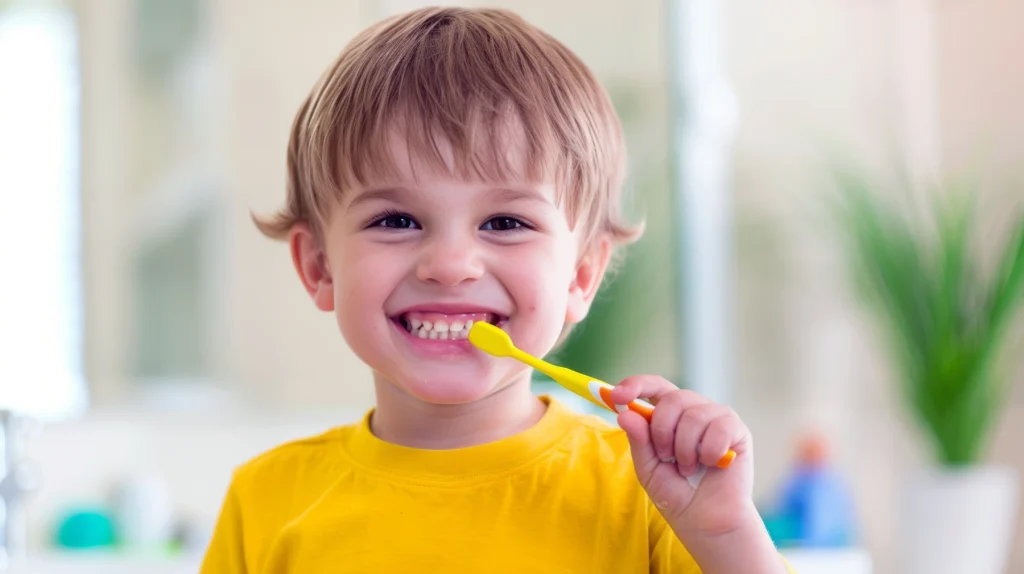
  5. Brushing children’s teeth twice daily with fluoridated toothpaste, between 1,000  1,500 ppm fluoride is effective in reducing dental caries in children. Using an age appropriate amount of toothpaste on the brush (“smear” for children under age 3; “pea-size” for children 3-6). Consensus-based  recommendation > Global agreement 95%
  6. Prescription-strength 1.1% NaF (0.5% F) gels and pastes are effective in reducing dental caries in high caries risk children over the age of 6. Consensus-based recommendation > Global agreement 78% 
  7. Use of 38% silver diamine fluoride (5% F) is effective for the arrest of dentine caries lesions in primary teeth. Evidence-based recommendation > Global agreement N/A

Other Recommendations